As the days shorten towards the winter solstice, the Kalash valleys turn inward. Chawmos (also Chaumos or Chitirmas) is the Kalash New Year and the longest and most solemn of their festivals: a time when people, homes and animals are purified, the ancestors are remembered, and the community prepares to begin the year anew.
When and where
Chawmos begins in the second week of December – usually from around the 8th, once the religious leaders announce it – and builds towards its close around 22 December. In 2024 it opened in Rumbur and two days later in Bumburet and Birir. Its timing is tied to Suri Jagek, the Kalash practice of observing the sun from fixed points in the valleys, which UNESCO recognised in 2018.
Smoke, bread and the ancestors
Dawn's correspondent in Chitral has counted more than fifty separate ceremonies at village level. Among the best documented:
- Bonfires on the slopes, where young people compete to send up the tallest column of smoke – a message of purification.
- Figures of goats, markhor and shepherds shaped from flour, baked and shared with neighbours to the sound of songs.
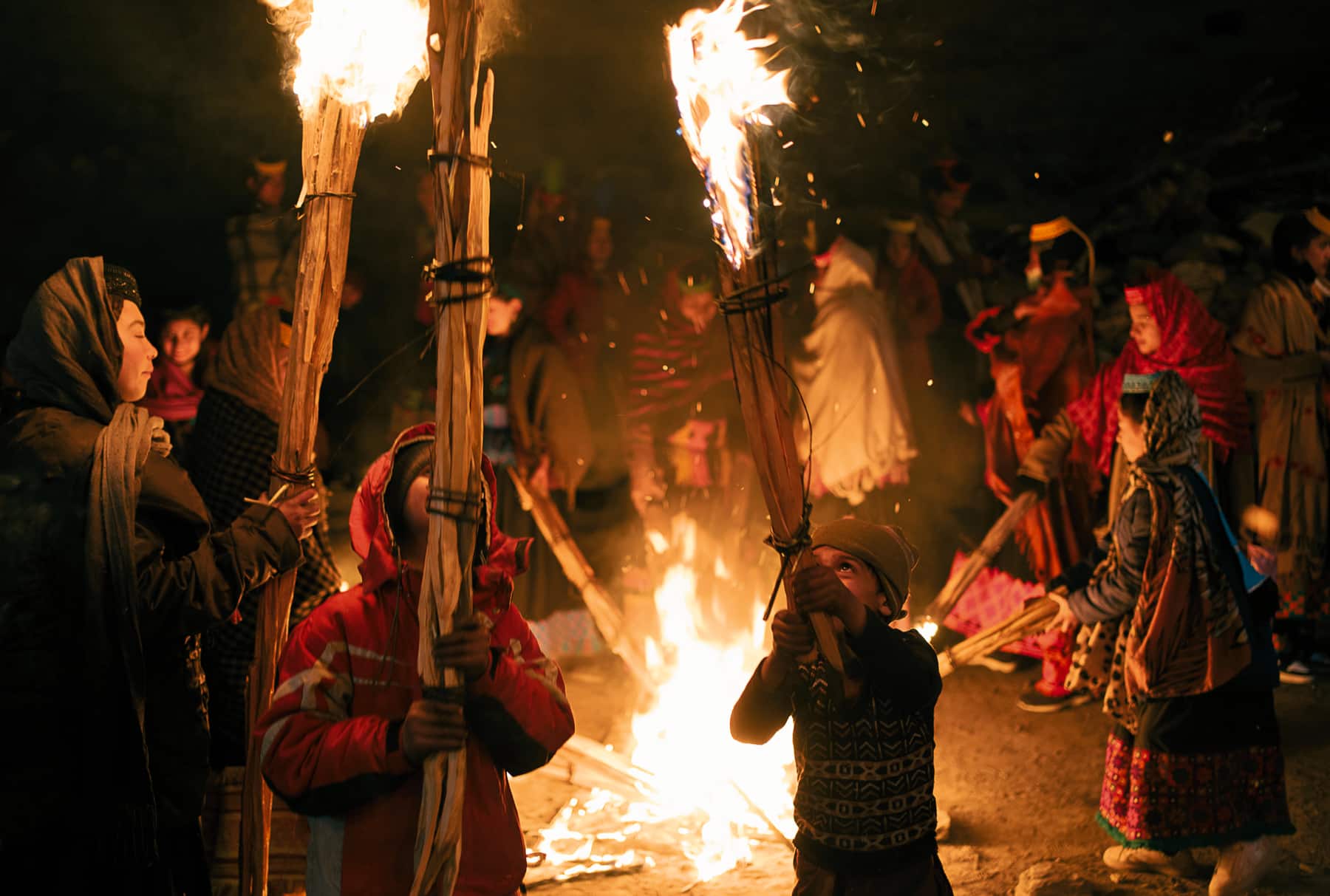
- Mandahik, an evening for the spirits of the dead, with offerings of bread and a fire lit to give them light, followed by singing and dancing by torchlight.
- Rites that welcome young children into the community, when they are dressed in Kalash costume.
- Purification of men and women in separate ceremonies towards the end of the festival.
Chawmos is dedicated to Balimahin, a deity said to arrive on horseback from the Kalash ancestral homeland. Researchers record women weaving small baskets while singing to him, and a final night of lit torches. The festival closes with a procession, with drums, to the centre of Bumburet.
A sacred time
Chawmos is a religious festival first, and parts of it are not open to outsiders. Dawn has reported that during some rites even contact with outsiders is believed to break the community's state of purity. In recent years, though, the public parts of the festival have drawn growing numbers of visitors, and local authorities now deploy tourism police and set up help points.
- Go with someone who knows the valleys, and follow their guidance on where you may and may not go.
- Never photograph people or rituals without clear permission.
- Expect deep winter: snow, cold and roads that can close.