On the longest night of the year, when temperatures in Baltistan can fall to minus fifteen or twenty degrees, the darkness is broken by fire. Mayfang (also written Mayfung, Mefang or May Fung) is the Balti festival of the winter solstice: a night of torches, bonfires, music and food that marks the turning of the year. In Balti, the name has been explained as 'the festivity of waving fire and light at night'.
When and where
Mayfang centres on the night of 21 December, the end of the longest night and the start of the new year – people greet each other with 'Losar', the Balti new year. It is celebrated across Baltistan, with events reported in Skardu, Shigar, Ghanche (including Khaplu and the Bara valley) and Kharmang; some years it has been staged over several days.
Fire on the mountain
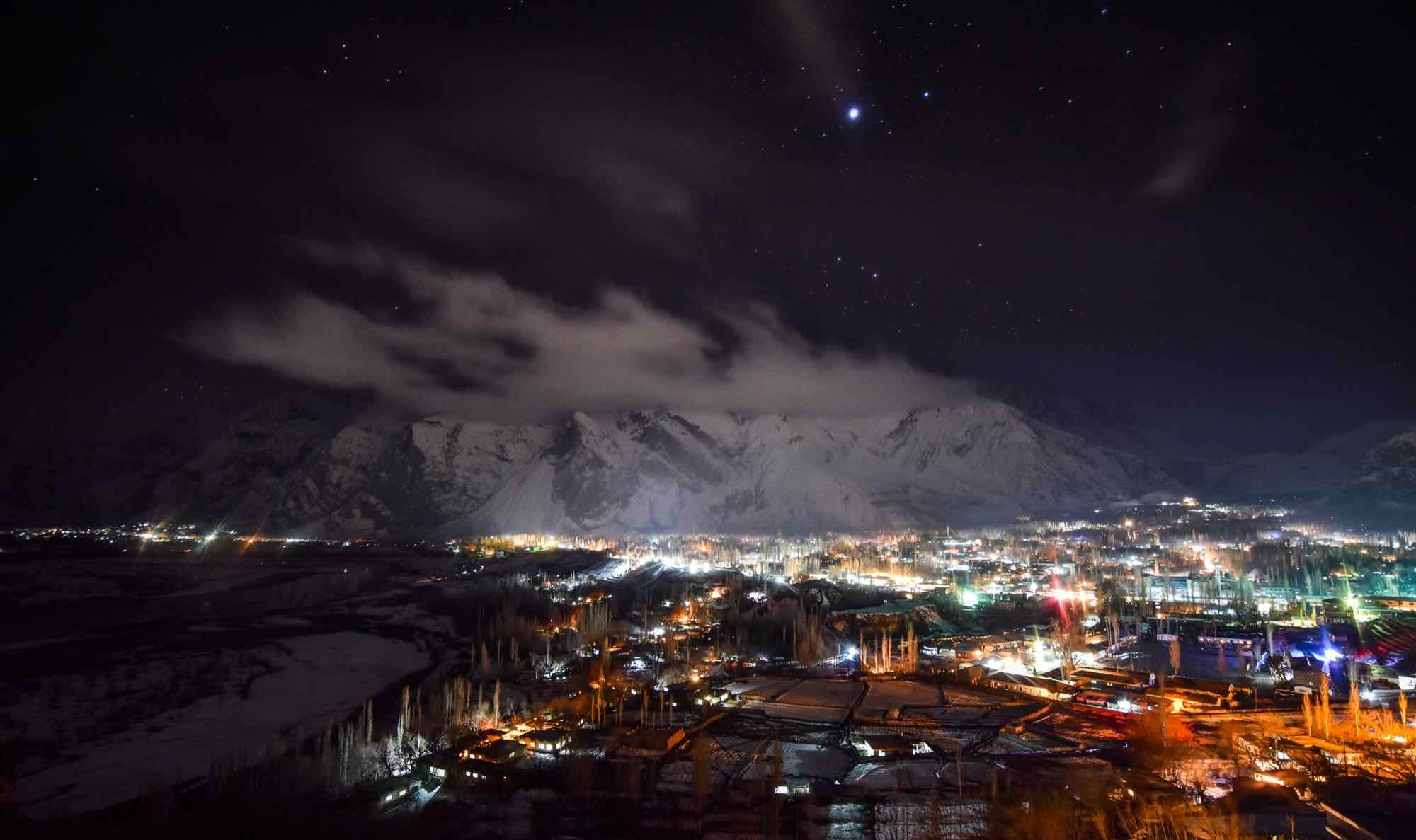
People gather on the mountainside, hold burning wood aloft and sing, then march down to their villages with the fire. In open spaces they wave torches, swing balls of fire in circles and dance to traditional music, much of it on goat-skin drums. Bonfires burn, candles are set on rooftops, and Skardu itself glows with lights. Many believe the fires protect against misfortune and natural disaster in the year ahead.
Food is shared through the night, including traditional Balti dishes such as parapo and marzan, and elders sing old songs and tell stories.
Old roots, many stories
Mayfang's origins are debated. Some local elders say it predates Islam in the region. One popular story links it to the death of a cruel, man-eating king – some name him as a ruler of the Maqpon dynasty – while others trace it to older Tibetan traditions, a link that some Balti writers reject. What is clear is that the festival declined for several decades and has been revived since the 2010s, helped by cultural organisations in Baltistan.
Visiting
Mayfang is a winter journey: expect severe cold, short days and the possibility of disrupted travel. Seeing Baltistan under snow, with fire on the hillsides, is something few visitors experience.