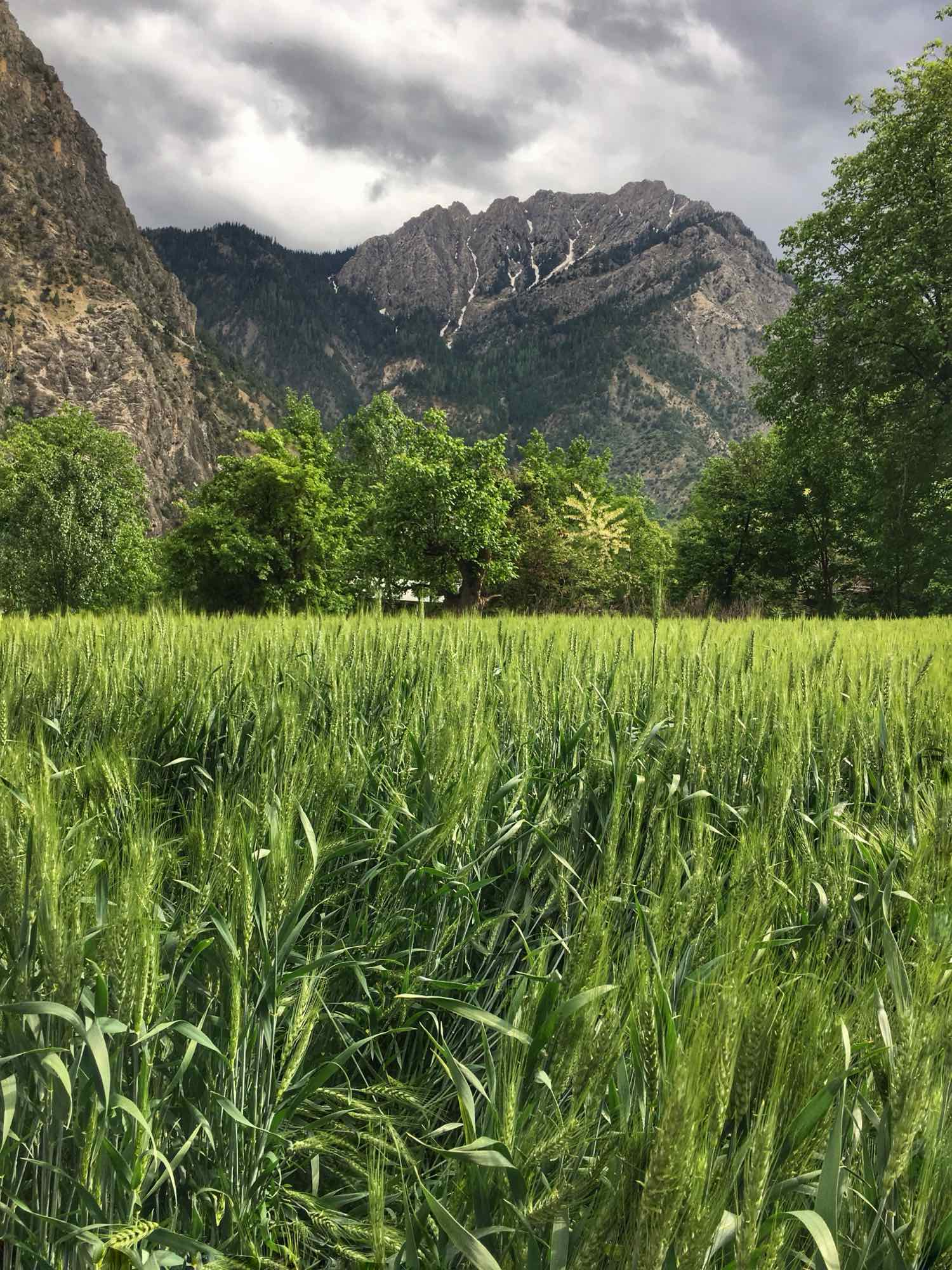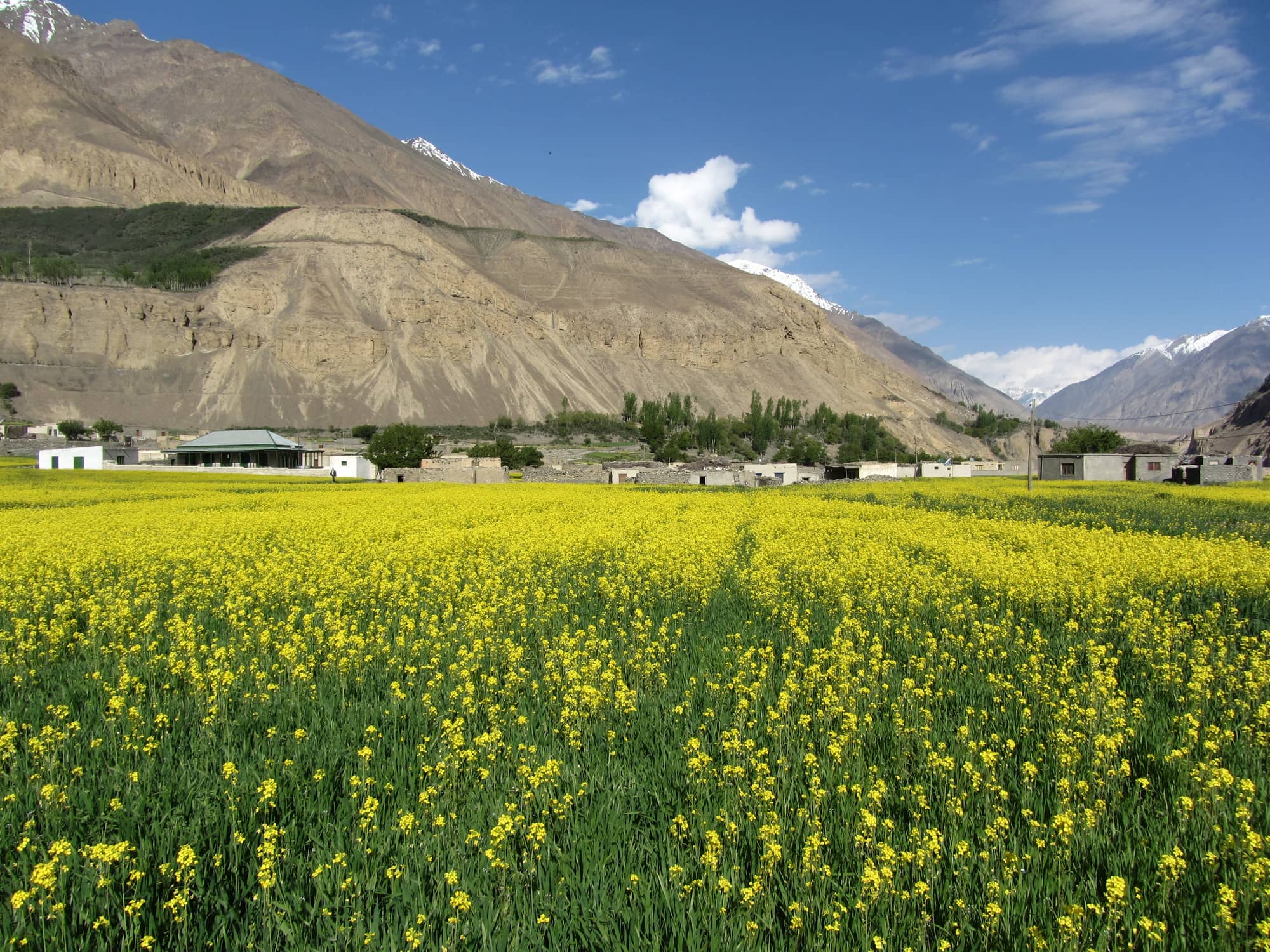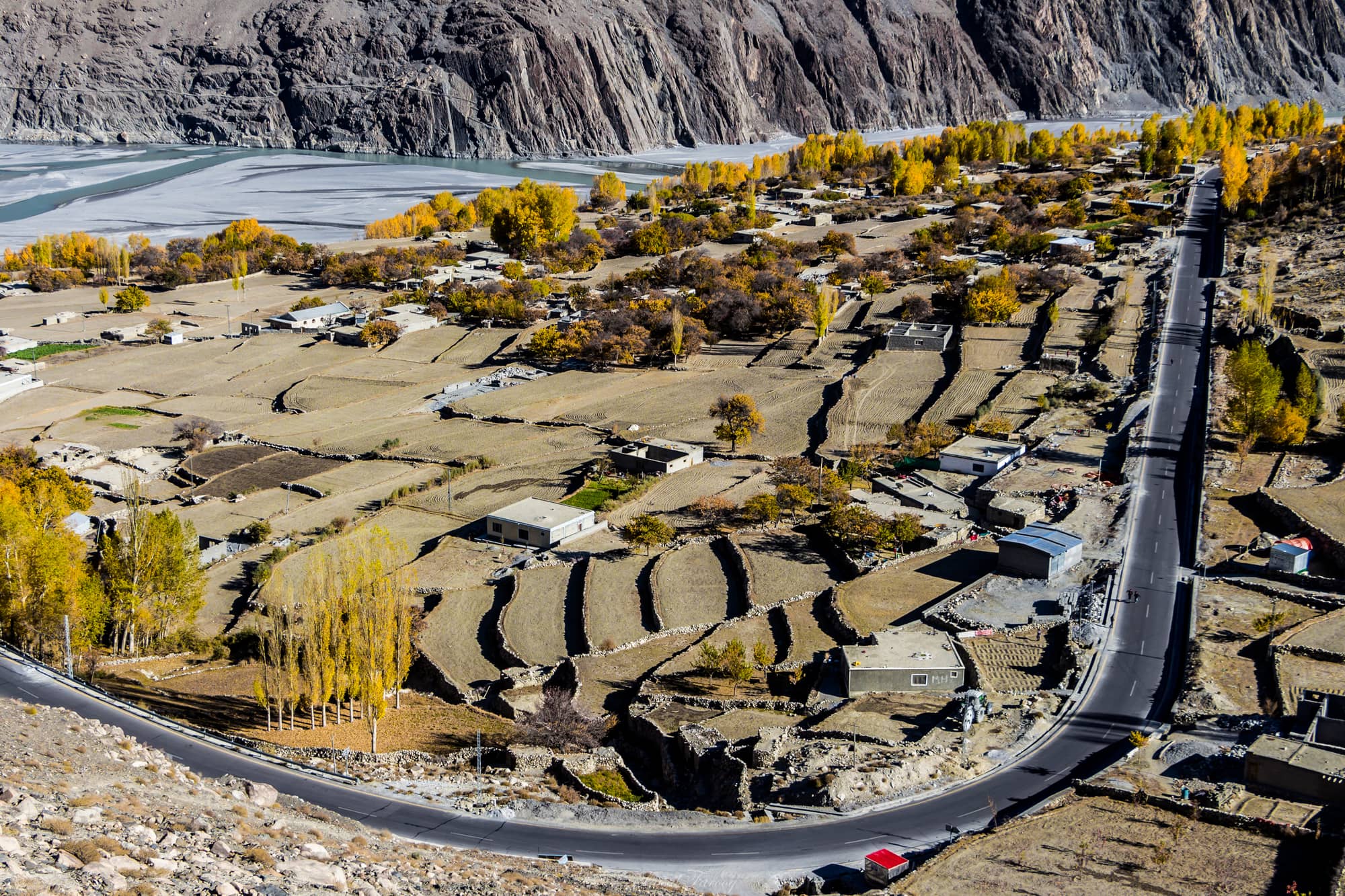
When the streams begin to run again with glacier melt and the fields can be worked, the Wakhi villages of Gojal mark the start of the farming year. Tagham (also written Thagham or Taγ̌m) takes its name from the Wakhi word for seed. It is the Wakhi counterpart of the Hunza sowing festival, Bofao: a day of prayers for a good harvest, omens, food and a ceremonial first ploughing.
When and where
In lower Gojal – the villages from Shishkat to Passu, including Gulmit and Hussaini – Tagham is usually held in the first week of March. Higher up, in Shimshal and Chipurson, it waits until the weather allows: in Shimshal the seed has traditionally been taken to the fields on the first day of April.
A month of preparation
Preparations begin weeks ahead, when wheat is processed to make semn, a sweet dish cooked like a pudding or halva. On the first day, villagers gather to share semn and other dishes and pray for the community and the crops. In the evening, a sprig of a plant called suthors is handed out by a representative of the family that leads the ceremony; families take it to the roof, eat bread with butter, and then bring the plant into the house through the smoke hole in the roof, before it goes out to the fields with the manure.
Smoke, an ox and the first furrow
The main day begins in an old house where juniper is burned in quantity, and the direction of the smoke is read to foretell which parts of the village will have the best harvest. The leading family then walks to the fields carrying decorated sticks, greeted by the whole village. One of them, dressed as an ox, clowns for the crowd.
After prayers for good crops and unity, an elder sows seed on a small plot and ploughs it with traditional tools and a pair of oxen, formally opening the farming season. Parents bring their young children to touch the ploughing tools, so that they grow up to be good farmers. All day, people greet each other with 'Shogun Bahor Muborak' – spring greetings.
In Shimshal, the 2016 festival included early-morning prayers, a costumed man planting the first wheat seed, dances by elders and children, and Wakhi folk poetry and songs.
Keeping it alive
Tagham has faded in some villages with changing ways of life, and recent celebrations have often been organised with the support of local cultural associations. It is a community festival rather than a tourist event: if you would like to be there, travel with someone from the valley and ask before you photograph people.